
You are standing in your kitchen, recipe open, no scale in sight, and the instructions say “use 3 ounces.” Sound familiar? Most people freeze right there. The good news is that 3 ounces is one of the easiest measurements to eyeball once you know the right comparisons. Three dry ounces equals 85 grams. Three fluid ounces equals 88.7 ml or 6 tablespoons. That is your quick answer, right at the top.
Now let us go deeper so you never have to guess again.
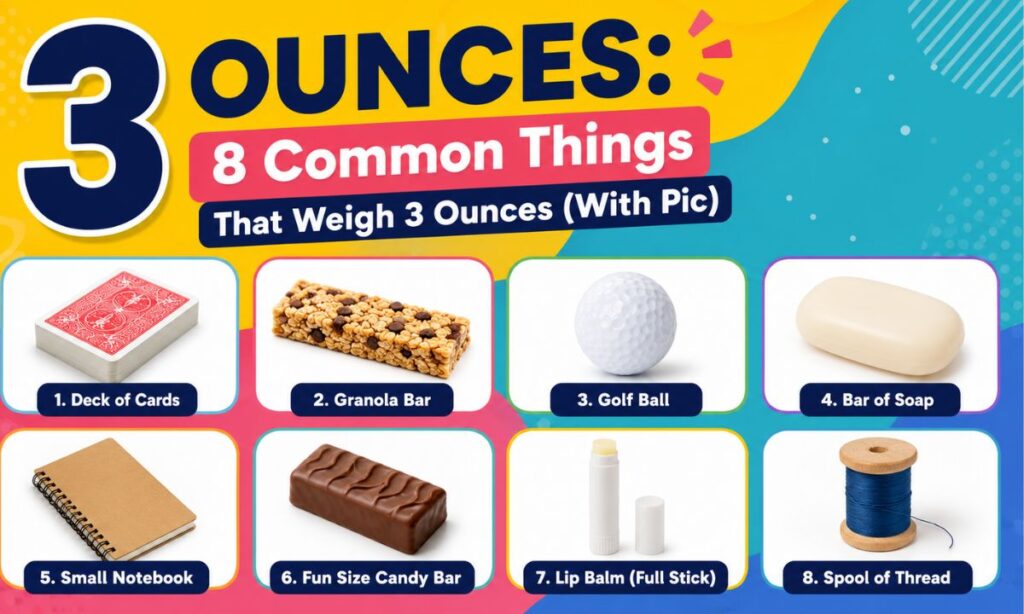
How Much Is 3 Ounces? 8 Common Things That Weigh 3 Ounces
Here is the thing most articles skip telling you. There are two different types of ounces, and mixing them up is where everyone goes wrong. Dry ounces measure mass and are used for solid foods like meat, cheese, and spices. Fluid ounces measure volume and are used for water, oil, juice, and medicine.
Three dry ounces is 85 grams. Three fluid ounces is 88.7 milliliters. These are close in number but are not the same thing and should not be swapped in a recipe.
The eight everyday items below are your cheat sheet. No scale needed. Just look, compare, and measure like a pro.
Two Large Eggs
Crack open your fridge and grab two large eggs. Hold them in your hand and you are holding almost exactly 3 ounces. A large egg weighs around 1.75 oz on average, so two together come to about 3.5 oz, which is the closest kitchen-friendly comparison you will find.
The USDA confirms that two large eggs deliver roughly 12 grams of protein, making this comparison useful not just for weight but for portion control in meal planning. If you are tracking macros or building a calorie-controlled diet, two eggs is your go-to visual anchor for 3 oz.
Next time someone asks you what 3 ounces looks like, just say two eggs. Simple, relatable, and always in your fridge.
Half a Small Chicken Breast
A small chicken breast typically weighs between 6 and 8 ounces. Cut it straight down the middle and you have a perfect 3-ounce serving of protein. This is the exact amount the USDA MyPlate guidelines recommend as a single protein portion for adults.
Visually, 3 oz of cooked chicken is roughly the size of your palm, not counting your fingers. It is also about the size of a standard deck of playing cards. That is the trick dietitians use when teaching clients how to eyeball serving sizes for meat.
A 3-ounce portion of cooked chicken delivers around 25 grams of protein. So if you are meal prepping lunches for the week, half a small chicken breast per container is exactly where you want to land.
A Bar of Soap
Walk into any hotel bathroom or grab a travel bag before a flight. That little bar of soap sitting in the wrapper? It weighs right around 3 ounces. Standard guest bars and travel-size soaps are deliberately manufactured at this weight.
This is no accident. The TSA 3-1-1 rule limits liquids and gels in carry-on bags to containers of 3.4 oz (100 ml) or less. Travel soap bars sit comfortably under that limit. A full-size bar is closer to 4 oz, so use the travel or guest bar as your reference, not the big bar on your shower shelf.
If you have ever slid a hotel soap into your palm, you already know the exact feel of 3 ounces in your hand. That tactile memory is worth more than any measuring cup.
A Small Jar of Spices
Head to the spice aisle of any U.S. grocery store. Those small jars of garlic powder, Italian seasoning, or ground cinnamon? Most of them net weigh between 2 and 3 ounces. They are compact, they fit in one hand, and they are a dead-reliable visual reference for small weight measurements in cooking.
| Spice | Typical Net Weight |
| Garlic Powder | 3 oz |
| Italian Seasoning | 2 to 3 oz |
| Ground Cinnamon | 2.5 to 3 oz |
| Crushed Red Pepper | 2 to 3 oz |
When you are baking or cooking and need to estimate 3 oz of a dry ingredient, grab a spice jar off your shelf and use it as a counterweight reference. It is the most underused kitchen trick people never talk about.
Twelve US Quarters
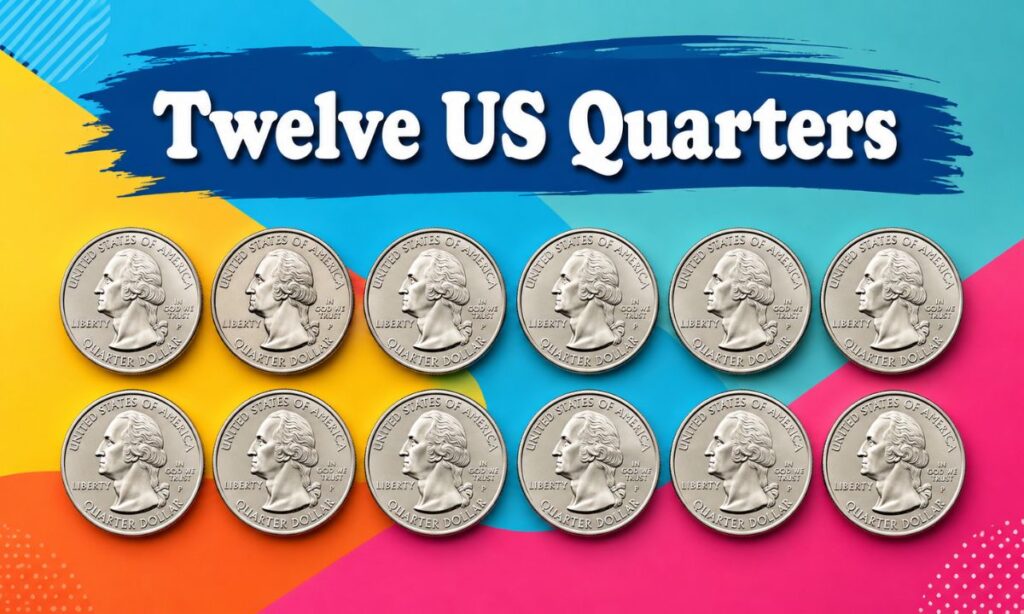
This one is the most precise trick on the list. According to the U.S. Mint, one quarter weighs exactly 5.67 grams (0.2 oz). Stacking 12 quarters gives you a solid DIY weight reference close to 3 oz for quick comparisons at home.
This trick works especially well for postage estimation when you do not have a postal scale. It is also a fun way to teach kids about weight without needing any equipment. Quarters are uniform, universally available, and always the same weight.
No kitchen scale? No problem. Quarters are the most accessible precision weight in any American household. Keep this trick in your back pocket for shipping packages, science projects, or settling bets about how much something weighs.
A Standard Lime
Pick up a lime from your fruit bowl. A fresh lime from a U.S. grocery store typically weighs between 2 and 3 ounces. A lemon runs slightly heavier, usually 3.5 to 5 ounces depending on size. Both are everyday citrus references that live on most kitchen counters.
Beyond the weight comparison, limes are rich in Vitamin C and citric acid, which makes them a great example of something small but nutritionally dense. The weight-to-nutrition ratio is something chefs and nutritionists often reference when talking about measuring ingredients by weight.
Holding a ripe lime gives you an instant gut-feel for 3 oz. Once you feel it once, your hand remembers. That is the whole point of these comparisons.
A Golf Ball
Here is one most people do not think about. A regulation golf ball weighs exactly 1.62 oz (45.9 grams) according to USGA rules. Two golf balls together weigh about 3.24 oz, which lands you right on the 3-ounce mark with just a tiny bit extra.
Golf balls are uniform in size and weight across all brands, which makes them one of the most consistent physical references you can find outside a kitchen. If you have a couple sitting in a drawer or a bag in the garage, grab two and hold them. That is your 3 oz.
This is a great reference for kids doing science projects or anyone trying to explain weight estimation in a hands-on, fun way.
A Small Matchbox Car
This one surprises people. A standard die-cast toy matchbox car weighs between 2.5 and 3.5 ounces depending on the model. The classic Hot Wheels and Matchbox cars land right around that range, making them a surprisingly accurate 3-ounce weight reference for kids and adults alike.
They are solid, metal, and small enough to hold in one hand. If you have a kid who collects them, pick one up and feel the weight. It is a fun and unexpected way to understand what 3 ounces feels like in real life.
Learning through familiar objects is always more effective than a number on a screen. This also makes for a great way to explain weight to children without a scale or formal measurement tools.
Also Read:300 Grams: Things with Pic That Weigh 300g
How Much Is 3 Ounces of Liquid?
When someone asks about 3 ounces of liquid, they are talking about fluid ounces, which is a measurement of volume, not mass. Three fluid ounces equals 88.7 ml, which rounds to about 89 ml. It is close to 100 ml but not the same, and in precise recipes that difference matters.
Practically, 3 fl oz looks like a small juice cup, a double shot glass, or roughly 6 tablespoons of any liquid. It is a common measurement for salad dressings, medicine doses, baby formula, and cooking oils.
The TSA 3-1-1 rule allows travel liquids up to 3.4 oz (100 ml) per container, so a 3 oz bottle clears airport security without any issues. That rule alone has made 3 fluid ounces one of the most recognized liquid measurements in American daily life.
How to Measure 3 Ounces Without a Scale
No scale at home? No panic either. These methods are reliable, fast, and use things you already have in your kitchen.
Use a Liquid Measuring Cup
Fill a standard U.S. measuring cup to the 3 fl oz line. This works perfectly for water, milk, oil, and any thin liquid. Most glass measuring cups have clear markings for fluid ounces right on the side.
This is the most accurate no-scale method for liquids. If you are measuring something like salad dressing or cooking oil, a measuring cup is your best friend. It takes 10 seconds and gives you a result within a few drops of perfect.
Count 6 Tablespoons
Since 1 fluid ounce equals 2 tablespoons, three fluid ounces equals exactly 6 tablespoons. This is the easiest conversion to memorize because it works for almost every liquid in a kitchen.
Grab your tablespoon measuring spoon and count out six. That is your 3 oz. This method works for soy sauce, vinegar, honey, olive oil, and any pourable liquid.
Use the Palm Method for Proteins
For meat, fish, or poultry, 3 oz equals roughly the size of your palm, not including your fingers or thumb. This is the visual trick used in USDA portion size guides and by registered dietitians across the country.
Your palm size does vary slightly person to person, but for most adults it is a close enough estimate for meal prep and daily eating. Practice it a few times with a scale beside you and your eye gets calibrated fast.
Stack 12 US Quarters
Stacking 12 US quarters gives you a reliable DIY weight reference close to 3 oz. Place them on one side of a homemade balance and compare the other side to what you are measuring.
This trick works especially well for postage estimation when you do not have a postal scale. Quarters are uniform, universally available, and always the same weight, which makes them a trustworthy tool for quick estimates.
3 Ounces in Cooking and Portion Control
Three ounces is the gold standard serving size for proteins according to USDA MyPlate guidelines. It applies to chicken, fish, beef, pork, and seafood. If you are meal prepping, tracking macros, or following a calorie-controlled eating plan, 3 oz of protein per meal is the number you will see everywhere.
For cooked pasta, 3 oz equals roughly half a cup, which is useful for tracking carbohydrate servings. For cheese, 3 oz is about three thin slices or a small handful of shredded cheese. These are the serving sizes you will find printed on nutrition labels and referenced in dietitian meal plans.
Understanding 3 oz in daily cooking saves money, reduces food waste, and helps with portion control without making eating feel restrictive. Once you know what it looks like, you stop over-serving and under-serving without thinking about it.
Quick Conversion Table for 3 Ounces
| Measurement | Equivalent |
| 3 oz in grams | 85 grams |
| 3 fl oz in ml | 88.7 ml (about 89 ml) |
| 3 fl oz in cups | 3/8 cup (0.375 cup) |
| 3 fl oz in tablespoons | 6 tablespoons |
| 3 oz vs 100 ml | Not equal, 100 ml is about 3.38 oz |
Conclusion
Three ounces sounds like a tiny, complicated measurement until you tie it to something real. Two large eggs. Half a small chicken breast. A travel soap bar. A spice jar. Twelve quarters. A fresh lime. A golf ball. A matchbox car. These are things you see, touch, and use every day.
You do not need a kitchen scale to understand what 3 ounces looks like or feels like. You just need one good reference point that sticks in your memory. Pick the one from this list that you see most often and let that be your anchor.
Next time a recipe calls for 3 oz and your scale is nowhere in sight, reach for two eggs or palm out your chicken breast. That is your measurement, right there in your hand.