

Ever stood in a brewery taproom wondering why some cans feel skinny and tall while others are short and chunky? You are not alone. Brewers, packaging managers, and even curious beer lovers ask this all the time. The truth is, beer can dimensions are not random. Every millimeter is engineered for a reason.
Whether you are a craft brewer picking your first packaging run or a consumer who just wants to know why your IPA comes in a tall boy, this guide breaks it all down. We cover standard beer can sizes, heights, diameters, international formats, and everything in between. No jargon, no fluff, just the real stuff.
Standard Beer Can Dimensions
If you have ever grabbed a cold one from the fridge, you have already held the most common standard beer can size in America. The 12 oz can is everywhere, and for good reason. It fits in your hand, your cup holder, and your cooler without any fuss.
But not all cans are created equal. The aluminum can dimensions vary across formats, and each one serves a different purpose. A sleek hard seltzer can looks nothing like a crowler at your local brewery, and that is completely by design.
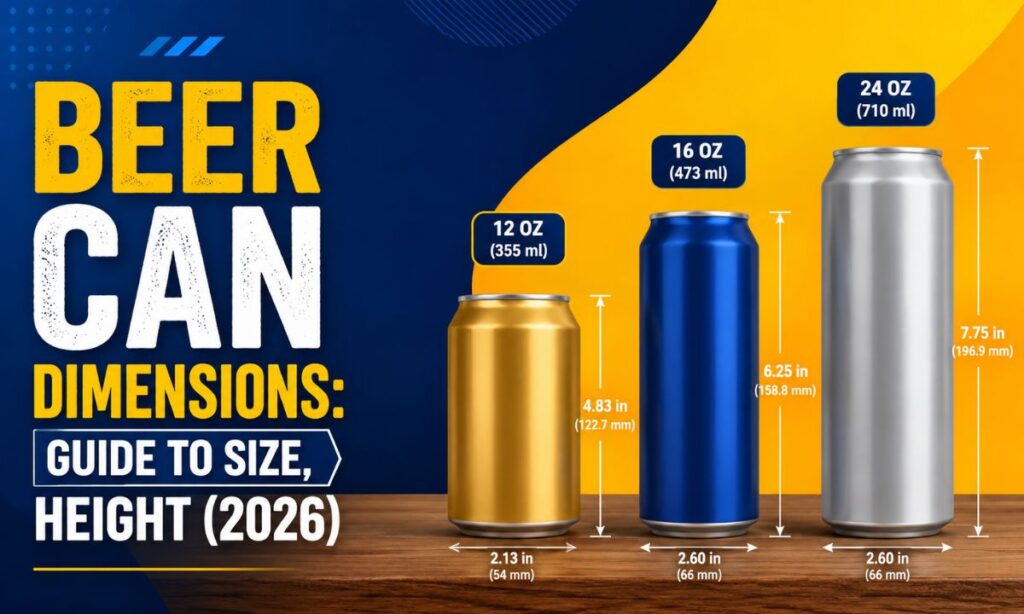
Here is a quick snapshot of the most common beer can sizes in the US market:
| Can Type | Volume | Height | Diameter |
| Standard 12 oz | 355 ml | 4.83 inches | 2.6 inches |
| 16 oz Tall Boy | 473 ml | 6.19 inches | 2.6 inches |
| Sleek 12 oz | 355 ml | 6.125 inches | 2.25 inches |
| 8 oz Mini | 237 ml | 3.47 inches | 2.6 inches |
| 19.2 oz Stovepipe | 568 ml | 6.9 inches | 2.86 inches |
| 24 oz King Can | 710 ml | 7.84 inches | 2.86 inches |
| 32 oz Crowler | 946 ml | 7.6 inches | 2.86 inches |
The Classic 12 oz Beer Can

The 12 oz beer can is the king of the shelf. Walk into any grocery store in the country and this is the format you will see dominating the cooler doors. It holds 355 milliliters of beer and stands exactly 4.83 inches tall with a 2.6 inch diameter.
This standard can size uses a 202 end diameter. That is the top seam specification that keeps your beer sealed and carbonated until you crack it open. Most domestic lagers, light beers, and mainstream craft beers ship in this format because consumers have trusted it for decades.
The 12 oz format also wins on logistics. It stacks cleanly, ships efficiently, and fits into every standard beer case, six-pack ring, and cooler sleeve on the market. If you are a brewer launching your first product, this is usually the starting point.
The Classic 12 oz Beer Can
The 12 oz aluminum can became the US standard back in the 1950s and it has never lost its throne. Why? Because it nails the sweet spot between serving size and portability. One can equals roughly one beer serving, which makes inventory and consumption tracking easy for everyone from bar owners to casual drinkers.
From a branding standpoint, the 12 oz can label area gives designers enough canvas to work with. The cylindrical surface wraps around 8.2 inches of printable space, which is plenty for bold graphics, ingredient lists, and QR codes.
Craft breweries love this size too because it keeps cost per unit low on large print runs. When you are ordering 50,000 cans to launch a session IPA, the 12 oz format gives you the best price point from suppliers like Ball Corporation and Crown Holdings.
ALSO READ:ZYN Can Dimensions: Standard Sizes, (2026)
The 16 oz Tall Boy Beer Can Dimensions
The 16 oz tall boy is the can you reach for when 12 oz just is not enough. It holds 473 milliliters of beer and stands 6.19 inches tall, while keeping the same 2.6 inch diameter as the standard 12 oz. It is basically the same width, just stretched upward.
Craft breweries have made the tall boy their favorite. IPAs, stouts, sours, and barrel-aged beers almost always show up in this format. The extra volume justifies a premium price point, and the taller can gives label designers more vertical real estate to tell a story.
Stadium vendors and convenience stores push this format hard. If you have ever grabbed a cold beer at a ballgame and paid a shocking amount for it, there is a good chance it was a 16 oz beer can. The format communicates value through sheer size.
The 16 oz Tall Boy Beer Can Dimensions
The tall boy’s 6.19 inch height makes it noticeably taller than a 12 oz can, and consumers pick up on that instantly. It signals a bigger, bolder experience before they even read the label. Breweries launching flagship IPAs or double stouts often default to this size because it matches the premium vibe they are building.
One thing worth knowing: the tall boy can diameter stays at 2.6 inches, which means it still fits standard cup holders and cooler slots. You do not need any special equipment to handle or serve it. That is a big deal for small taprooms and food trucks that cannot afford custom storage setups.
The 16 oz format also works brilliantly for limited releases. When you are only pressing 5,000 cans of a small-batch beer, the tall boy gives your product a shelf presence that competes with much larger brands. It is the underdog can that plays above its weight class.
The Sleek Beer Can Design
The sleek can is what happens when a beverage brand wants to feel modern. It holds the same 355 milliliters as a standard 12 oz can, but the can dimensions are completely different. It stands 6.125 inches tall with a much narrower 2.25 inch diameter.
Hard seltzers basically built their entire visual identity around this format. White Claw, Truly, and a dozen other seltzer brands use the sleek can because it looks clean, light, and health-forward on the shelf. The slimmer grip also appeals to consumers who want something that feels lighter in the hand.
From a branding perspective, the sleek can design is a differentiator. If your product is aimed at a younger, health-conscious consumer, a sleek can signals sophistication without saying a word. It is packaging psychology working in your favor.
The Sleek Beer Can Design
The sleek can height of 6.125 inches makes it tower over a standard 12 oz can, but the narrow 2.25 inch diameter keeps the overall volume the same. This ratio creates a visual trick. The can looks taller and more premium even though you are getting the same amount of liquid.
Breweries targeting younger drinkers or the crossover craft plus wellness crowd lean heavily on this format. Flavored beers, low-calorie lagers, and fruit-forward sours all look at home in a slim beer can. It sends a signal about who the product is for before anyone reads the ABV.
One practical note: the sleek can uses the same filling lines as standard cans with minimal retooling. So if you are a mid-size brewery already running 12 oz cans, switching to a sleek format for a new product line is not a massive capital investment.
The 32 oz Crowler Can Dimensions
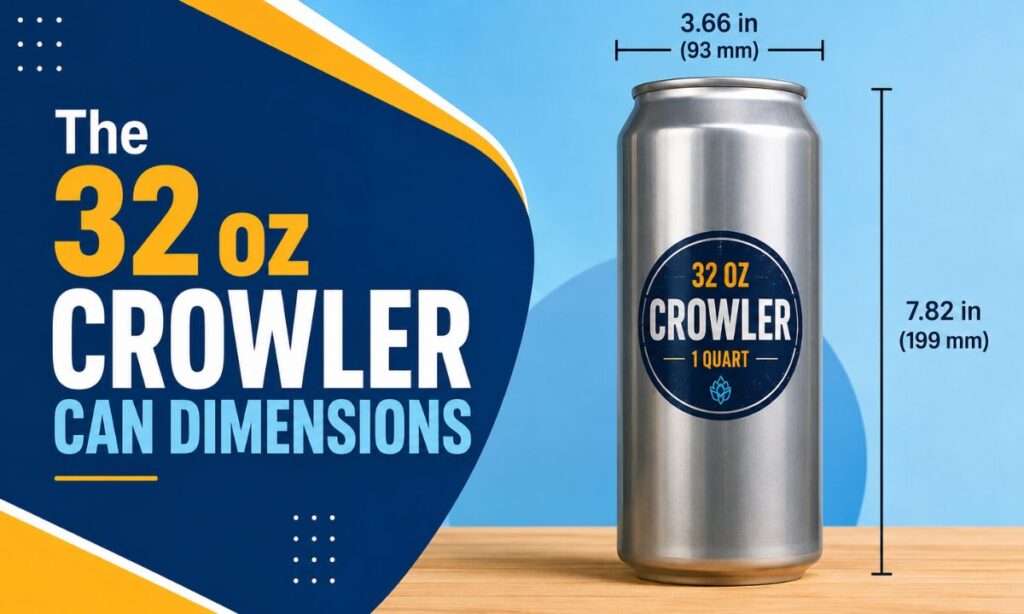
The 32 oz crowler is the format you will find at craft brewery taprooms and bottle shops. It holds 946 milliliters of beer and stands 7.6 inches tall with a 2.86 inch diameter. Unlike the other cans on this list, crowlers are typically filled and sealed fresh on-site, not at a factory.
The crowler was invented to replace the growler. It solves the main problem with glass growlers: freshness. A properly seamed crowler can creates an airtight seal that keeps draft beer carbonated and fresh for days. It is the to-go format that serious beer drinkers actually trust.
The crowler can end size is 300 diameter, which is slightly larger than the 202 end used on standard cans. This is because the wider body of the crowler needs a bigger top seam to maintain structural integrity and seal quality.
The 32 oz Crowler Can Dimensions
Most taprooms that offer crowlers use a countertop crowler seaming machine that crimps the lid on fresh-filled cans in about 30 seconds. It is a simple process that transforms a commodity can into a personalized takeout experience. Breweries love it because it requires no large capital investment.
The 32 oz format also works for specialty releases. If a brewery taps a rare barrel-aged stout or a limited hop-forward IPA, filling crowlers on the spot lets them offer those beers to-go without the overhead of a full canning run. It is flexibility built into the format.
Crowlers hold a slight freshness edge over standard canned product from a packaging line too. Because each one is sealed to order, there is minimal time between fill and cap, which means oxygen exposure is extremely low. For hop-forward beers like NEIPAs where freshness is everything, that matters a lot.
Beer Can Height and Length
Beer can height is one of the most overlooked specs in packaging decisions. Most people focus on volume, but height affects shelf fit, display stacking, and even how the can feels in your hand. Getting this wrong can mean your product does not fit standard retail cooler shelves or shipping boxes.
The range across common formats is significant. The shortest beer can in common use is the 8 oz mini at just 3.47 inches. The tallest is the 24 oz king can at 7.84 inches. That is more than a 4-inch swing between the smallest and largest common formats.
Understanding beer can length matters if you are designing packaging, building display fixtures, or calculating pallet configurations for a production run. Every inch affects freight cost and store shelf utilization.
Height Variations Across Different Beer Can Sizes
The standard 12 oz can height of 4.83 inches has become so embedded in consumer muscle memory that deviating from it is a deliberate marketing statement. Going taller says premium. Going shorter says convenience or portion control.
The 19.2 oz stovepipe can is worth mentioning here because it is increasingly popular at stadiums and convenience stores. At 6.9 inches tall and 2.86 inches in diameter, it is sized to fill a standard stadium cup perfectly. That is not a coincidence. The format was engineered specifically for single-serve stadium sales.
Neck height is another dimension most people never think about. On a standard can, the neck is roughly 0.72 inches tall. This is the tapered section near the top where the seamed end attaches. Proper neck geometry is critical for seam integrity and compatibility with automated filling equipment.
Diameter and Circumference Measurements
Beer can diameter directly affects grip comfort, cup holder compatibility, and filling line requirements. The two most common diameters in the US market are 2.6 inches for standard formats and 2.25 inches for sleek cans.
The circumference of a 2.6-inch diameter can works out to roughly 8.2 inches. That is your usable label wrap area. Graphic designers working on beer can label dimensions need to know this number cold. Going even slightly over means your label seam shows up in the wrong place.
Crowler and stovepipe cans measure 2.86 inches in diameter. The wider format is necessary to maintain structural strength at larger fill volumes. Thinner walls on a wide-body can would buckle under carbonation pressure, so the geometry is engineered to compensate.
International Beer Can Dimensions Comparison
Step outside the US and beer can dimensions shift noticeably. The UK and Europe have their own standards, and understanding them matters if you are exporting or importing product.
European 330 ml cans are the closest equivalent to the American 12 oz. At 330 ml versus 355 ml, they hold just slightly less beer. They stand about 4.7 inches tall with a 2.6 inch diameter. The slight size difference reflects metric standardization rather than any meaningful engineering difference.
440 ml cans are the UK’s answer to the tall boy. Popular for craft beers, premium lagers, and specialty ales, they measure approximately 6.5 inches tall with a 2.6 inch diameter. The 500 ml European can, common across the continent, stands 6.7 to 6.9 inches tall and holds 16.9 fluid ounces, fractionally more than an American tall boy.
Different Beer Can Sizes
Beyond the main formats, there are two beer can sizes that deserve more attention because they are growing fast in the US market but rarely appear in standard guides.
The 8 oz mini can is the portion control king. At 3.47 inches tall and 2.6 inches in diameter, it holds just 237 ml of beer. Major brands like Budweiser and Corona have leaned into this format for variety packs and casual social settings where a full 12 oz feels like too much.
The 24 oz king can sits at the other end of the spectrum. Standing 7.84 inches tall with a 2.86 inch diameter, it holds 710 ml of beer. You will spot these mainly in convenience stores and gas stations, often carrying domestic lagers. The format is unapologetically big and positioned entirely on value.
Sustainability and Recyclability
Here is something genuinely impressive about aluminum beer cans: they are the most recycled beverage container in the United States. According to the Aluminum Association, the US aluminum can recycling rate sits around 45 to 50 percent annually. The material is infinitely recyclable without quality loss.
Every beer can size on this list shares the same environmental advantage. The aluminum in a 12 oz can you recycle today can be back on a store shelf as a new can in as little as 60 days. That closed-loop cycle is genuinely difficult to match with glass or plastic packaging formats.
Lightweighting is another sustainability win that does not get enough attention. Modern aluminum beer cans use significantly less metal than cans from the 1980s. Manufacturers have reduced wall thickness through improved alloy engineering, meaning each can uses less material and generates less waste per unit produced.
Portability and Convenience
Beer can portability is one of the strongest arguments for the format over glass bottles. Cans are lighter, shatterproof, and block light completely. That last point matters more than most people realize. Light struck beer tastes skunky. Aluminum cans eliminate that problem entirely.
The 12 oz standard can fits perfectly in backpack pockets, bike bottle cages, stadium cup holders, and standard cooler slots. It has been engineered into the infrastructure of outdoor recreation and entertainment spaces across the country. That integration is almost invisible because it works so well.
Tall boy and sleek cans maintain this portability advantage while offering a more premium or expressive product experience. The slightly taller profile still fits most modern cup holders and front-of-cooler display slots, so the consumer experience stays seamless across formats.
How to Choose the Right Beer Can Size for Your Brewery
Choosing a beer can format comes down to three things: your target customer, your distribution channel, and your production volume. A taproom-focused brewery selling fresh IPAs has completely different needs than a regional brewer distributing to grocery chains.
If you are launching a flagship beer for wide retail distribution, the 12 oz standard can gives you the lowest unit cost, the widest filling line compatibility, and the most familiar format for consumers. Defaulting to it is not a lazy choice, it is a logical one.
If you are a taproom or specialty brewery, the 16 oz tall boy or crowler format gives you better margin per unit and better shelf presence for premium pricing. Consumers expect to pay more for a tall boy, which means your revenue per ounce goes up without requiring you to explain the price.
Conclusion
Beer can dimensions are not just numbers on a spec sheet. They are packaging decisions that affect your brand perception, your logistics costs, your retail shelf performance, and your consumer experience all at once.
The 12 oz standard can remains the foundation of the American beer market. The 16 oz tall boy dominates craft and premium positioning. The sleek can owns the hard seltzer and lifestyle beverage space. The crowler serves the taproom freshness experience. And the 8 oz mini and 24 oz king can round out the spectrum for portion control and value respectively.
Pick the format that matches where your beer is going, who is drinking it, and what story you want your packaging to tell. Because in a crowded cooler, the right beer can size is often the first thing that makes someone reach for yours instead of the one next to it.