

Ever grabbed a can from the fridge and wondered why some feel tall and skinny while others feel short and chunky?
You are not imagining things. Aluminum can dimensions actually vary quite a bit depending on the drink inside.
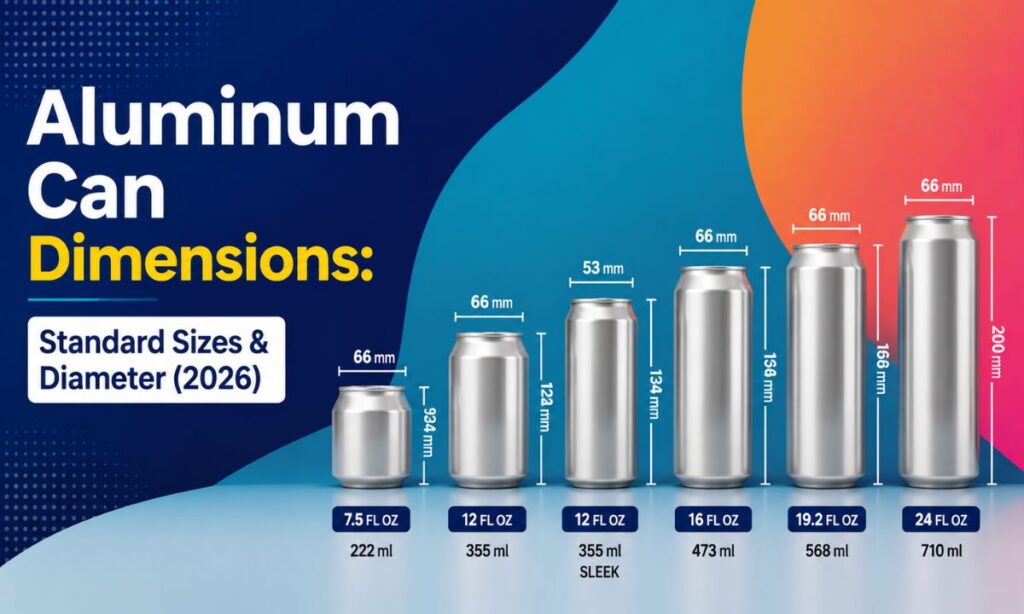
A standard 12 oz aluminum can measures 2 11/16 inches (66 mm) in diameter and 4.8 inches (122 mm) in height. But that is just one of several formats sitting on store shelves right now.
Whether you are a designer, a manufacturer, or just someone who got curious, this guide breaks it all down simply.
Aluminum Can Size Chart
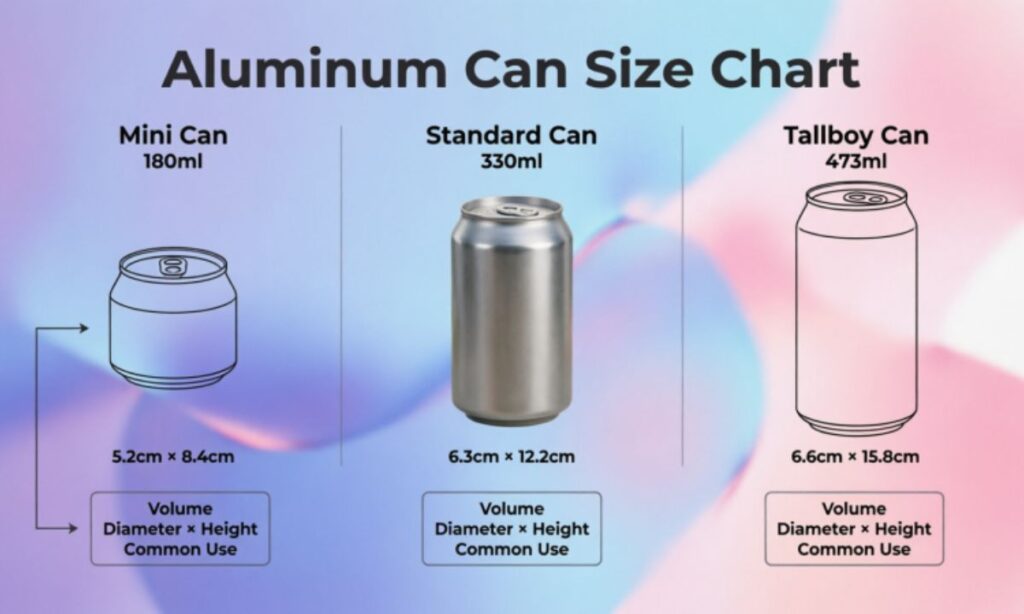
Before anything else, here is a quick snapshot of every major aluminum can size in the US market.
This table is your cheat sheet for beverage can dimensions at a glance.
| Can Type | Volume | Diameter | Height | Common Use |
| Standard | 12 oz / 355 mL | 2 11/16″ / 66 mm | 4.8″ / 122 mm | Soda, Beer, Iced Tea |
| Sleek | 12 oz / 355 mL | 2.25″ / 57 mm | 6.1″ / 156 mm | Craft Beer, Premium Drinks |
| Stubby | 8.45 oz / 250 mL | 2 11/16″ / 66 mm | 3.6″ / 92 mm | Import Beer, Specialty Drinks |
| Slim | 8.45 oz / 250 mL | 2.1″ / 53 mm | 5.3″ / 134 mm | Energy Drinks, Sparkling Water |
| Tall Boy | 16 oz / 473 mL | 2 11/16″ / 66 mm | 6.2″ / 158 mm | Craft Beer, Energy Drinks |
| Mini | 7.5 oz / 222 mL | 2 1/8″ / 53 mm | 3.7″ / 94 mm | Portion Control, Kids Drinks |
| Large Format | 19.2 oz / 568 mL | 2 11/16″ / 66 mm | 7″ / 178 mm | Craft Brewery Singles |
Notice how the standard can diameter of 66 mm shows up again and again. That is not a coincidence, that is the industry locking in universal compatibility across filling machines worldwide.
Standard Aluminum Can Dimensions
Here is something most people never think about. That cold can of Coke you crush on a hot day was engineered to the millimeter.
Standard aluminum can dimensions did not happen by accident. They came from decades of tweaking for cost, strength, and consumer feel.
The aluminum can body is made from 3004 aluminum alloy and the lid from 5182 alloy. These are engineered blends, not pure aluminum. They are lighter, stronger, and more recyclable than anything else in packaging.
Beverage can specifications at this level matter because even 0.01 mm off can cause production line failures. Wall thickness sits between 0.097 and 0.104 mm, thinner than a human hair yet strong enough to hold carbonated pressure without flinching.
The Standard 12 oz Aluminum Can – America’s Most Common Size
The standard 12 oz can is America’s bestseller and honestly the benchmark everything else gets compared to.
It holds 355 mL of liquid, measures 66 mm in diameter, and stands 122 mm tall. Walk into any convenience store and roughly 6 out of 10 canned drinks you see are this exact format.
The 211 diameter code is the industry shorthand for this can. That code translates to 2 and 11/16 inches, which is exactly 66 mm. Filling equipment, packaging lines, and shipping cases are all built around this number globally.
One thing that surprises people is the slight neck taper at the top. The can neck diameter is narrower than the body, saving aluminum and letting manufacturers stack cans more efficiently during transport.
Aluminum Can Height Variations Across Different Formats
Here is where things get fun. Same volume, completely different shape. Aluminum can height can swing from 92 mm on a stubby all the way to 178 mm on a large format craft can.
A sleek can stands at 156 mm while holding the exact same 355 mL as a standard 122 mm can. The math works because the sleek format trades width for height, using a 57 mm diameter instead of 66 mm.
Can height measurement in the industry is always taken seam to seam. That means from the bottom double seam to the top seam. Manufacturing tolerances allow less than 1 mm of variation.
Also Read:9 Inches: 6 Things with Pictures That Are 9 Inches Long
Aluminum Can Sizes in the US Market
Walk down any beverage aisle and you are looking at a carefully engineered lineup of aluminum can sizes.
Each format has a specific job, a target consumer, and a reason it exists beyond just looking cool. The US market runs four primary formats alongside several specialty sizes.
The Can Manufacturers Institute reports that Americans consume roughly 100 billion aluminum cans per year. That volume demands standardization, which is why beverage can sizes follow strict industry codes rather than random measurements.
Sleek Aluminum Cans – Modern and Sophisticated
Pick up a craft IPA or a premium sparkling water lately? Chances are it came in a sleek aluminum can with that tall, narrow silhouette.
The sleek can dimensions sit at 57 mm diameter and 156 mm height for 12 oz of liquid. Brands love this format because it creates more label real estate.
A taller can means more vertical space for branding, ingredients, and artwork. The slim can diameter of 57 mm also feels different in your hand, more intentional and more premium.
Craft breweries and premium beverage brands have driven sleek can adoption hard over the last five years. The format signals quality before the consumer even opens it.
Stubby Aluminum Can Dimensions
The stubby can is the short, wide one that looks almost cartoonishly compact. It holds 250 mL (8.45 oz) and measures 66 mm in diameter with a height of only 92 mm.
Import beers and vintage-style brands lean into this shape because it reads as old-school and distinctive on shelf. Despite the shorter stature, the stubby can diameter matches the standard 211 code at 66 mm.
That means it can run on the same filling lines as standard cans with minimal retooling, a huge cost win for manufacturers. Stubby can height at just 92 mm also lets retailers pack more units per shelf row.
Slim Aluminum Can Measurements
The slim can is the energy drink world’s signature shape. At 53 mm diameter and 134 mm height, it holds 250 mL while looking tall and athletic.
Red Bull basically made this format globally famous starting in the 1990s. The slim can diameter of 53 mm fits comfortably in most car cup holders and feels natural in one hand.
Beyond energy drinks, sparkling water and functional beverages have adopted the slim format heavily. Slim can dimensions also maximize packing efficiency in shipping, fitting more units per pallet than wider formats.
Aluminum Can Diameter Specifications
Aluminum can diameter is measured at the widest point of the can body, not at the neck or the lid.
The industry uses a standardized coding system where the first digit represents inches and the remaining digits represent sixteenths of an inch. A 211 diameter means 2 and 11/16 inches, which is exactly 66 mm.
This coding system comes from Ball Corporation and Crown Holdings specification standards adopted decades ago. Every filling machine, case packer, and retail cooler shelf in America is designed around these codes.
Standard Can Diameter Measurements
The standard can diameter of 66 mm is designated as the 211 code and dominates the US market.
It applies to the standard 12 oz can, the stubby 8.45 oz can, the 16 oz tall boy, and several large format sizes. This shared diameter keeps production lines efficient across very different can shapes and volumes.
The 202 can lid that sits on top of most 12 oz cans measures approximately 54 to 55 mm in diameter. This is smaller than the can body because the lid seats inside the neck taper. A common misconception lists this as 52 mm, but the correct measurement is 54 to 55 mm.
Diameter Variations in Specialty Aluminum Cans
Specialty formats break away from the 211 standard to create market differentiation. Sleek cans use a 57 mm diameter, coded as 204. Slim cans go narrower still at 53 mm, which corresponds to the 200 code.
These diameter differences are not just visual. They change the structural dynamics of the can. A narrower diameter under the same internal carbonation pressure requires thicker walls or stronger alloys to compensate.
For packaging designers, diameter variation opens up creative possibilities. A sleek can diameter makes a 12 oz product look like a premium European import. A standard 211 diameter communicates familiarity and value.
Aluminum Can Length and Height
People use length and height interchangeably for cans, but in manufacturing they mean the same thing since cans stand upright.
Aluminum can height is the official measurement used in spec sheets, taken seam to seam in the vertical position. The range across all formats spans from 92 mm on the stubby to 178 mm on large format cans.
Height is not just aesthetic. It directly affects how cans fit in vending machines, retail cooler shelves, and home refrigerators. Beverage can height is one of the first specs a retailer checks before agreeing to stock a new product format.
How Aluminum Can Height Is Measured
Can height measurement starts at the bottom seam and ends at the top seam. The seamed ends add approximately 5 to 6 mm total to the body height on a standard can.
So a can body that is 116 mm tall becomes a finished can measuring 122 mm once both seams are formed. Industry measurement uses calipers or optical systems calibrated to ISO standards.
Manufacturing tolerances for height are kept within plus or minus 0.5 mm on modern production lines. A deviation beyond that tolerance can cause misfeeds in automated packaging equipment, which is expensive to fix mid-run.
The Relationship Between Can Height and Volume
Here is something genuinely interesting. Two cans can hold the exact same 355 mL while looking completely different in size.
A standard 12 oz can at 122 mm and a sleek 12 oz can at 156 mm are a perfect example. Volume equals pi times radius squared times height. A narrower radius needs more height to compensate.
This relationship creates a psychological effect that brands exploit knowingly. A taller can feels like more, even when the volume is identical. Sleek can dimensions let brands charge a premium price while delivering the same amount of liquid.
Popular Aluminum Can Sizes and Dimensions
Beyond the standard formats, several specialty aluminum can sizes have carved out serious market share.
These formats serve specific consumer needs that the 12 oz standard simply cannot cover. Here are the ones worth knowing in detail.
16 oz Tall Boy Aluminum Can Dimensions
The 16 oz tall boy is the go-to format for craft beer and hard seltzer brands targeting value-conscious drinkers.
It holds 473 mL of liquid and measures 66 mm in diameter and 158 mm in height. The shared 211 diameter means it runs on the same production equipment as standard 12 oz cans with only a height adjustment.
Craft breweries love the tall boy because it delivers 33 percent more beer than a standard can at a lower per-ounce cost. The extra can height also gives artists more label space, which matters enormously in the craft beer world where packaging drives purchase decisions.
Mini Aluminum Can Sizes
Mini aluminum cans answer a question that health-conscious consumers started asking loudly about 15 years ago. Can I enjoy a soda without committing to a full 12 oz serving?
The 7.5 oz mini can said yes, measuring approximately 53 mm in diameter and 94 mm in height. Coca-Cola and Pepsi rolled out mini cans as a direct response to portion control trends.
Parents buying drinks for kids, people watching sugar intake, and snack pack variety buyers all became the target audience. The mini format has also proven popular in premium mixer and cocktail categories as a single-serve option with no leftover waste.
Large Format Aluminum Cans (19.2 oz, 24 oz, 25 oz)
Large format aluminum cans are the craft beer world’s answer to the glass bomber bottle.
The 19.2 oz can holds 568 mL and stands approximately 178 mm tall with the standard 66 mm diameter. It is the single-serve format that craft breweries use to justify premium pricing on special releases.
The 24 oz and 25 oz formats push height even further, sometimes reaching 185 mm and beyond. These are stadium and convenience store favorites. From an environmental standpoint, large format cans reduce packaging waste per ounce compared to buying multiple smaller cans.
How Aluminum Cans Are Actually Made
Most people picture a factory stamping out cans like cookie cutters. The reality is way more impressive.
A modern can-making line produces up to 2,000 cans per minute using a process called Draw and Iron. A flat aluminum disc gets punched and drawn into a cup shape, then ironed through a series of dies that thin the walls while stretching the can body to its final height.
The bottom dome is formed in the same step, which strengthens the base against internal pressure. The aluminum alloy composition matters enormously here. Body stock (3004 alloy) has different drawing properties than end stock (5182 alloy), which is why they are specified separately in supplier contracts.
Aluminum Can Dimensions vs Tin Can Dimensions
People still call them tin cans, but that name is basically wrong for beverages. Aluminum beverage cans use aluminum alloy, not tin. Tin-plated steel cans still exist but they are for food products, not drinks.
The differences in can specifications are real and meaningful. Here is a quick comparison:
| Feature | Aluminum Can | Tin Can (Steel) |
| Wall Thickness | 0.097 to 0.104 mm | 0.20 mm or more |
| Weight (empty) | ~14.9 grams | ~40% heavier |
| Recyclability | Infinite cycles, no quality loss | Limited, loses properties |
| Corrosion Resistance | Natural oxide layer | Needs tin coating |
| Common Use | Beverages | Food products |
Aluminum can weight is a key reason the beverage industry fully switched from steel to aluminum in the 1960s and 1970s. Lighter cans mean lower shipping costs across millions of units, and the material opened up the easy-open tab lid that everyone now takes for granted.
Frequently Asked Questions
What are the dimensions of a standard aluminum can?
A standard 12 oz aluminum can measures 66 mm (2 11/16 inches) in diameter and 122 mm (4.8 inches) in height. This is the most common beverage can size in the United States.
What is the diameter of a 12 oz aluminum can?
The diameter is 66 mm, designated as the 211 code in the industry. Sleek 12 oz cans use a narrower 57 mm (204 code) diameter while holding the same volume.
How tall is a standard aluminum can?
A standard 12 oz can stands 122 mm (4.8 inches) tall, measured seam to seam. Sleek cans of the same volume stand taller at 156 mm.
What is the difference between sleek and slim aluminum cans?
Sleek cans hold 12 oz (355 mL) in a 57 mm diameter, 156 mm tall format. Slim cans hold 8.45 oz (250 mL) in a 53 mm diameter, 134 mm tall format. Sleek is taller and larger. Slim is narrower and smaller volume.
What size lid does a standard 12 oz can use?
A standard 12 oz can uses a 202 lid which measures approximately 54 to 55 mm in diameter. This is smaller than the can body because the lid seats inside the neck taper.
How tall is a 16 oz tall boy can?
A 16 oz tall boy can stands approximately 158 mm (6.2 inches) tall with a 66 mm diameter. It holds 473 mL of liquid.
Conclusion
Aluminum can dimensions are not just numbers on a spec sheet. They shape how consumers perceive a product before they even taste it.
A tall sleek can says premium. A stubby can says vintage. A mini can says portion control. A tall boy says value. Every millimeter is a marketing decision as much as an engineering one.
The standard 12 oz aluminum can at 66 mm diameter and 122 mm height remains the undisputed king because it nails the balance of familiarity, cost efficiency, and consumer convenience.
But the growing variety of aluminum can sizes in the US market proves that one size definitely does not fit all beverages anymore. Whether you are a brand manager choosing your next packaging format, a designer laying out label artwork, or just someone curious about that Red Bull can on your desk, understanding beverage can specifications gives you a real edge.
Got a question about a specific can format not covered here? Drop it in the comments and let us figure it out together.