
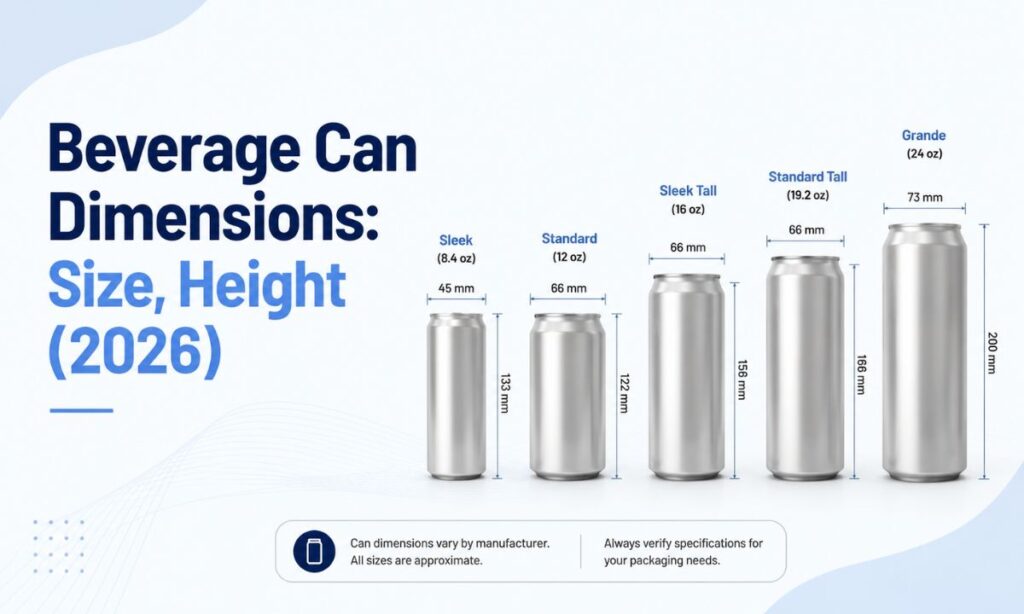

You picked up a can today without thinking twice about it. But if you work in beverage production, retail, or packaging, those millimeters matter a lot. The wrong can size costs you shelf space, shipping money, and customer attention.
Beverage can dimensions vary from the tiny 7.5 oz mini at 4.0 inches tall to the massive 64 oz growler stretching past 10 inches. Every size was designed with a specific purpose, a specific consumer, and a specific place on the shelf. This guide breaks every size down so you know exactly what you are working with.
Dimensional Comparison Tables
Before we get into the details, here is a quick reference for every major beverage can size. These numbers come from Ball Corporation and Crown Holdings published specifications, the two largest can manufacturers in the world. Slight variations of 1 to 2 mm can exist between manufacturers and regions, but these figures are the industry standard.
Mini Cans (7.5 to 8.4 oz)
| Can Size | Height | Diameter | Volume | Common Use |
| 7.5 oz | 4.0″ / 102mm | 2.13″ / 54mm | 222ml | Mini sodas, kids drinks |
| 8.4 oz | 4.75″ / 121mm | 2.12″ / 53mm | 250ml | Energy drinks, sparkling water |
Standard 12 oz
| Can Size | Height | Diameter | Volume | Common Use |
| 12 oz Standard | 4.83″ / 123mm | 2.6″ / 66mm | 355ml | Sodas, beer, iced tea |
| 12 oz Slim | 6.125″ / 156mm | 2.25″ / 57mm | 355ml | Hard seltzers, RTD cocktails |
Tall Boys (16 to 24 oz)
| Can Size | Height | Diameter | Volume | Common Use |
| 16 oz | 6.19″ / 157mm | 2.6″ / 66mm | 473ml | Craft beer, iced coffee |
| 19.2 oz | 7.12″ / 181mm | 2.6″ / 66mm | 568ml | Convenience store beer |
| 24 oz | 8.5″ / 216mm | 2.88″ / 73mm | 710ml | Value beer, energy drinks |
Large Formats (32 to 64 oz)
| Can Size | Height | Diameter | Volume | Common Use |
| 32 oz Crowler | 7.12″ / 181mm | 4.0″ / 102mm | 946ml | Fresh draft beer, breweries |
| 64 oz Growler | 10-11″ / 254-279mm | 4.75″ / 121mm | 1893ml | Specialty beer, wine, sharing |
Standard Beverage Can Dimensions by Size
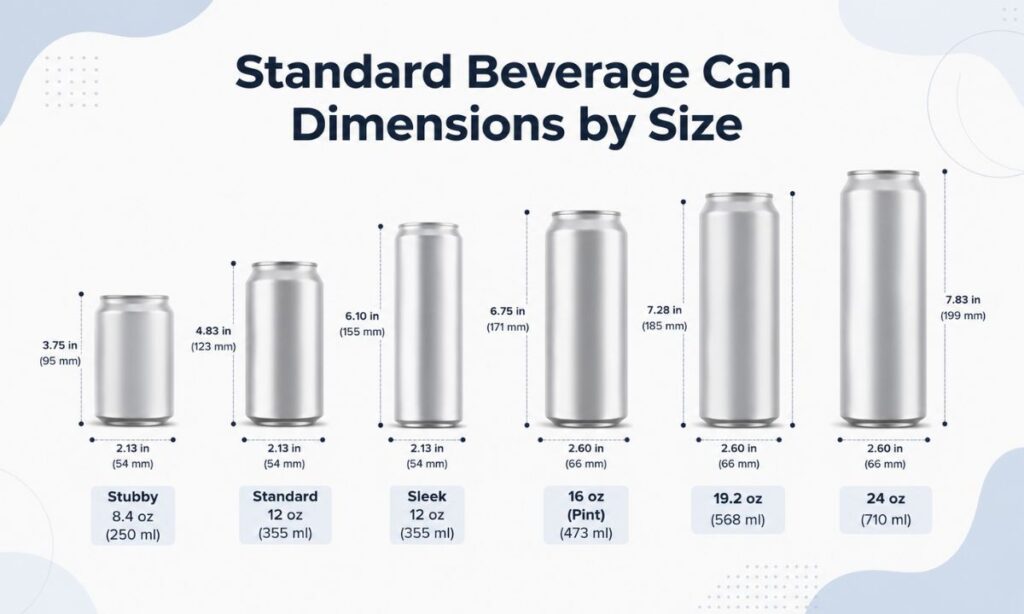
Not every can is the same, and each size tells a story about who drinks it and where. The shape, the height, the diameter, all of it is a decision someone made based on consumer behavior, production costs, and brand strategy. Here is the full breakdown of every major standard can dimension.
7.5 oz Mini Can Dimensions
The 7.5 oz mini can stands 4.0 inches (102mm) tall with a diameter of 2.13 inches (54mm). It holds 222ml, just enough for a quick refreshment without overcommitting to a full can. Airlines love these because they fit the service tray perfectly, and vending machines stack them efficiently.
Soda brands started pushing this size hard around 2010 as a portion control play. Consumers who felt guilty about a full 12 oz could justify the mini without thinking twice. The smaller aluminum can footprint also helps on shelf in mixed display settings.
This size is not about volume. It is about occasion and perception. A mini can of Coke at a kids birthday party or a minibar hotel room hits differently than a standard can. If you are a brand targeting health-conscious buyers or premium gifting sets, this mini can dimension is worth serious consideration.
8.4 oz Energy Can Dimensions
The 8.4 oz can measures 4.75 inches (121mm) tall with a diameter of 2.12 inches (53mm). It holds exactly 250ml, which is the globally recognized single-serve energy drink volume. Red Bull built an entire category identity around this specific slim can shape.
One important note: earlier versions of this article listed the height as 5.75 inches, which is incorrect. The correct height for a standard 250ml slim energy can is approximately 4.75 inches based on Ball Corporation specifications. Always verify against manufacturer spec sheets before production planning.
The narrow profile of this energy drink can dimension fits car cup holders and backpack side pockets without any fuss. That is not an accident. The design was intentional from the start. Brands in the functional beverage space still use this format because the shape itself communicates energy and premium quality.
12 oz Standard Can Dimensions
The 12 oz standard can is the most produced beverage container on the planet. It stands 4.83 inches (123mm) tall with a diameter of 2.6 inches (66mm) and holds 355ml. Every production line, every distributor cooler, every retail shelf in the USA is built around this measurement.
The proportions of this standard aluminum can allow 1,200 to 1,300 units per pallet, which keeps logistics costs low. No other size offers the same combination of consumer familiarity and supply chain efficiency. If you are launching a beverage brand for the first time, starting with this format saves you real money.
This 12 oz can measurement also carries decades of cultural weight. A cold Coke, a beer at a ballgame, an iced tea on a hot afternoon. They all come in this size. Switching away from it requires a very good reason because the consumer default expectation is already set.
12 oz Slim/Sleek Can Dimensions
Same volume, completely different personality. The 12 oz slim can stretches to 6.125 inches (156mm) tall while narrowing to 2.25 inches (57mm) in diameter. It still holds 355ml but looks nothing like a standard can on the shelf.
Hard seltzer brands figured this out early. The taller, slimmer profile reads as lighter and more premium. That visual cue helped differentiate hard seltzer can dimensions from traditional beer in the minds of consumers. White Claw and Truly both used this format to establish a separate identity from beer cans sitting right next to them.
The sleek can size also photographs better for social media, which matters a lot for modern beverage marketing. A tall, slim can looks elegant in a flat lay or a lifestyle shot. For brands targeting female consumers or wellness-oriented buyers, this beverage can height sends the right signal before anyone reads the label.
16 oz Tallboy/Pint Can Dimensions
The 16 oz tallboy measures 6.19 inches (157mm) tall with a 2.6 inch (66mm) diameter and holds 473ml. That is just under a full US pint, which is why craft beer brands gravitated toward it fast. Consumers feel like they are getting a proper pour rather than a quick sip.
Label real estate is a big reason craft breweries love this tallboy can size. A 16 oz can gives 28% more surface area than a standard 12 oz, which means more room for the art, the story, and the brewery branding that drives premium pricing. That extra space turns the can into a collectible as much as a drink.
For iced coffee brands, the 16 oz aluminum can dimension also works well because it aligns with the 16 oz cup size everyone orders at coffee shops. The mental reference point is already there. Consumers pick it up without doing any math in their head.
19.2 oz Stovepipe Can Dimensions
The stovepipe stands 7.12 inches (181mm) tall with a 2.6 inch (66mm) diameter and holds 568ml. This is a convenience store exclusive format, almost entirely. You find it in single-door coolers next to the register, never in a grocery store six-pack.
The name stovepipe comes from the visual. It is tall, straight, and narrow like an old iron stovepipe. Major domestic beer brands use this 19.2 oz can to target single-serve occasions at sporting events, gas stations, and road trip stops. The format says one and done more than any other size on this list.
From a retail perspective, the stovepipe can dimension is brilliant for margin. Convenience stores mark it up significantly compared to a 12-pack equivalent. And because it is not sold in packs, there is no price-per-ounce comparison happening in the consumer’s head.
24 oz Oil Can Dimensions
The 24 oz oil can reaches 8.5 inches (216mm) tall with a wider 2.88 inch (73mm) diameter holding 710ml. The wider base changes the whole feel. This one is noticeably bulkier than a tallboy. It earned the nickname oil can because it looks a little like a motor oil container.
Value perception is the core job of this 24 oz beverage can. Mainstream beer brands and large energy drink companies use it to offer more volume at a lower per-ounce cost. The consumer feels like they are getting a deal, even when the margin is actually higher for the brand.
Shelf placement for this large can format needs extra thought. Its wider profile means it does not stack or face as efficiently as 12 oz or 16 oz cans. Retailers need to plan cooler space deliberately if they want it displayed properly.
32 oz Crowler Dimensions
The crowler measures 7.12 inches (181mm) tall with a much wider 4.0 inch (102mm) diameter holding 946ml. That wide base is what sets it apart from everything else on this list. You see crowlers at taprooms, craft breweries, and specialty bottle shops.
The crowler can size exists because breweries needed a way to package fresh draft beer for takeaway. Before crowlers, you had growler jugs, which were glass, heavy, and required returning to the brewery. A sealed crowler can keeps beer fresh for several weeks without refrigeration, which is a huge practical win.
From a beverage packaging dimension standpoint, the 32 oz crowler is best measured by its diameter rather than height. The wide base requires a seamer machine specifically sized for this format. If you run a taproom, that equipment investment is worth it for the revenue per unit on fresh can sales.
64 oz Growler Dimensions
The growler stands anywhere from 10 to 11 inches (254 to 279mm) tall with a 4.75 inch (121mm) diameter holding 1893ml. The range in height exists because manufacturers have slightly different specs for this large format. This is the sharing size. One growler fills roughly four pint glasses.
Premium positioning is everything with the 64 oz growler can. Nobody buys a growler for everyday drinking. It is for a special occasion, a dinner party, or a local brewery experience worth taking home. The large aluminum can dimension signals abundance and quality just by existing on a shelf.
Distribution is the main challenge with this size. The 64 oz format does not fit standard cooler shelving built for 12 oz and 16 oz cans. Retailers that carry it need dedicated display space, and brands need to plan for that in their distribution strategy.
Also Read:Pringles Can Dimensions: Size, Height (2026)
Beverage Can Dimensions by Category
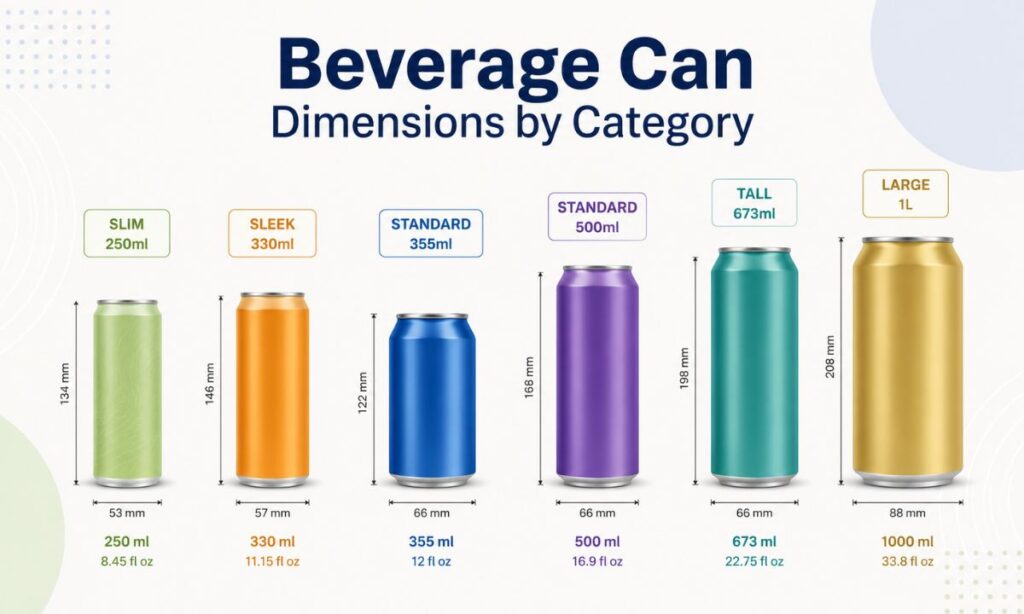
Different drinks have different jobs, and the can shape is part of how that job gets communicated. Understanding beverage can dimensions by category helps you see why certain formats dominate in certain aisles. It is not random. Every choice has a logic behind it.
Soft Drink Can Dimensions
Soft drinks live and die by the 12 oz standard can at 4.83 by 2.6 inches. This format became universal through decades of consistent use by Coke, Pepsi, and every major soda brand. The 7.5 oz mini has grown in popularity for variety packs and portion-control positioning.
The soda can dimensions story is really a story of infrastructure lock-in. Every bottling plant, every delivery truck configuration, every retail cooler in the USA was designed around the 12 oz standard. Changing that now would cost the industry billions.
Secondary formats like 16 oz and 24 oz exist for value seekers and fountain drink alternatives. But the default consumer reach always goes to the standard 355ml can. That muscle memory is worth billions in brand equity.
Energy Drink Can Dimensions
Energy drinks own two formats: the 8.4 oz slim at 4.75 by 2.12 inches and the 16 oz tallboy at 6.19 by 2.6 inches. The 8.4 oz is the original. Red Bull made it iconic and every competitor had to respond to it. The 16 oz emerged as brands tried to offer more value per purchase.
The energy drink can height and diameter communicate speed, function, and edge. A tall slim can looks nothing like a soda. That visual distance is intentional. Brands in this category are selling a feeling, and the slim can dimension delivers that before anyone pops the tab.
Monster and Bang both use the 16 oz tallboy as their primary format now. The extra volume fits the consumer expectation of a longer-lasting energy boost. It also gives brands more label canvas for aggressive visual branding.
Craft Beer Can Dimensions
Craft beer uses the 12 oz standard and the 16 oz tallboy almost exclusively. The 12 oz works for session beers meant to be enjoyed in multiples. The 16 oz is for the premium single-serve experience, the special release, the hazy IPA with the detailed illustrated label.
Craft beer can dimensions are also about telling a story on the can body. A 16 oz tallboy gives a small brewery 28% more surface area to work with. That extra real estate is marketing budget you do not have to spend elsewhere.
Four-packs of 16 oz cans became a craft beer staple because they hit a sweet price point. Four tall boys at a decent craft price feels premium without feeling unaffordable. The tallboy pint can size turned a packaging decision into a pricing strategy.
Hard Seltzer Can Dimensions
Hard seltzers almost universally use the 12 oz slim can at 6.125 by 2.25 inches. This was a deliberate category-building decision from the very beginning. Sitting next to a 12 oz beer can on the same shelf, the slim can reads as lighter, cleaner, and different.
The hard seltzer can measurement communicates low calorie before the consumer ever reads the nutrition panel. That is powerful branding built into the physical container. White Claw, Truly, and Bud Light Seltzer all reinforced this standard until it became the category expectation.
Some brands have experimented with 16 oz slim formats as the category matures. But the core slim beverage can dimension remains dominant because consumers now associate that shape with the product. Changing the format at this stage would confuse buyers more than it would help.
Ready-to-Drink Coffee Can Dimensions
RTD coffee brands use the 8 oz stubby and 12 oz sleek formats most often. The 8 oz stubby signals a quick morning hit, similar to an espresso shot scaled up. The 12 oz sleek positions itself as the coffee shop cup equivalent in a can.
RTD coffee can dimensions are also chosen to support nitrogen sealing. Nitrogen-infused canned coffee needs a can that can handle the pressure without deforming. The sleek format handles this well and gives the product a premium shelf presence.
Starbucks Doubleshot and La Colombe draft latte both use sleek formats. The beverage can height of a sleek 12 oz coffee can also signals that it is not a soda or an energy drink. That visual separation matters in a refrigerator door full of competing products.
Canned Wine and Cocktail Dimensions
Canned wine primarily uses two formats: the 250ml slim at approximately 4.75 by 2.12 inches and the 375ml half-bottle equivalent. The 250ml matches a standard glass of wine, which makes the portion feel familiar and justified. The 375ml is two glasses, a logical upgrade for a nicer occasion.
Canned wine dimensions deliberately mimic wine glass serving sizes rather than beer or soda logic. That alignment with wine culture helps consumers who might feel weird about wine in a can. When the volume matches what they are used to pouring, the mental barrier drops.
Ready-to-drink cocktails span a wider range from 200ml to 19.2 oz depending on ABV and occasion. High-ABV cocktails tend to come in smaller formats to keep the drink-to-effect ratio reasonable. Lower-ABV spritz styles use the 12 oz slim or 16 oz tallboy to align with casual drinking occasions.
Why Beverage Can Dimensions Actually Matter for Your Business
Here is something most articles skip over entirely. The can size you choose affects your supply chain, your retail placement, and your consumer perception all at the same time. Getting this decision wrong at launch is expensive to fix.
• Production compatibility: Most co-packers and contract fillers are optimized for 12 oz standard and 16 oz tallboy. Choosing a non-standard aluminum can dimension often means higher minimums, longer lead times, and premium pricing per unit.
• Retail shelf fit: Standard cooler shelving is built for 12 oz and 16 oz cans. A 24 oz oil can or 19.2 oz stovepipe requires dedicated space, and retailers may not give it to a new brand without proof of demand.
• Consumer psychology: A taller can reads as more premium. A wider can reads as more value. A smaller can reads as portion-controlled or artisan. Your beverage can communicate height and diameter before anyone reads a single word on the label.
Conclusion
Beverage can dimensions are one of the most underrated decisions in the drink industry. Every millimeter affects production cost, shipping weight, shelf fit, and how a consumer reaches for your product. The 12 oz standard dominates for a reason, but every other size on this list exists because it solves a specific problem for a specific consumer.
Pick the format that fits your brand story, your production setup, and your retail strategy. Then commit to it, because switching formats mid-launch is a headache no one needs. If this guide helped you, share it with someone in your team who is wrestling with the same packaging decisions.