

Ever stared at a ruler and had zero idea where 2mm actually falls? You are not alone. Most people in the US think in inches, so millimeters feel like a foreign language.
Here is the quick answer: 2mm equals 0.0787 inches — which is less than one-tenth of an inch. It is tiny, yes, but you run into 2mm size comparisons every single day without realizing it.
From the edge of a coin in your pocket to the seed in your spice jar, 2mm everyday objects are literally all around you. Once you know what to look for, you will start spotting them everywhere.
How Big Is 2mm? Exact Measurement
Think of 2mm as the width of two stacked credit cards, minus a sliver. That is how small we are talking — but it is still visible to the naked eye. It sits right at that sweet spot where you can see it clearly but still struggle to measure it without a proper tool.
One inch equals exactly 25.4mm, so 2mm measurement works out to roughly 8 hundredths of an inch. Most American rulers divide inches into sixteenths, which makes sub-centimeter measurements genuinely tricky. This is exactly why a metric ruler or a digital caliper works so much better when you need precision at this scale.
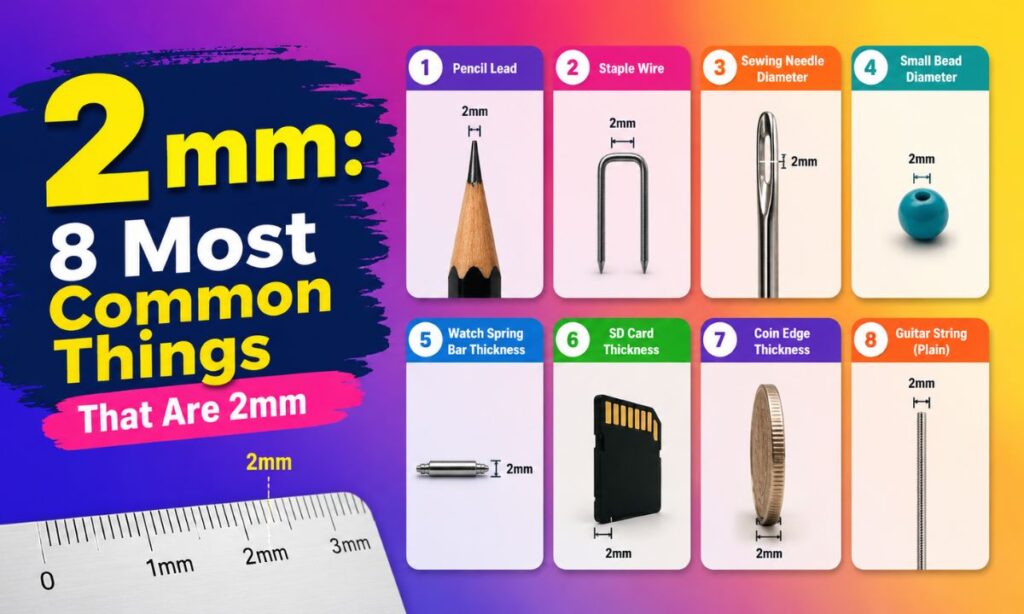
The best way to picture it right now, without any tool at all? Grab a standard artist pencil and look at the tip of the lead. That is your 2mm visual reference, sitting right there in your hand.
How Long Is 2mm?
Here is a quick 2mm conversion table so you can cross-reference fast:
| Unit | Equivalent of 2mm |
| Inches | 0.0787 in |
| Centimeters | 0.2 cm |
| Meters | 0.002 m |
| Micrometers | 2,000 µm |
| Feet | 0.00656 ft |
| Yards | 0.00219 yd |
A lot of people ask: is 2mm equal to 1 cm? No, not even close. One centimeter equals 10mm, so 2mm is only one-fifth of a centimeter — five times smaller.
Another common question: how thick is 2mm in standard imperial? It is just over 5/64 of an inch, which is why a metric ruler always gives you a cleaner read for anything this small.
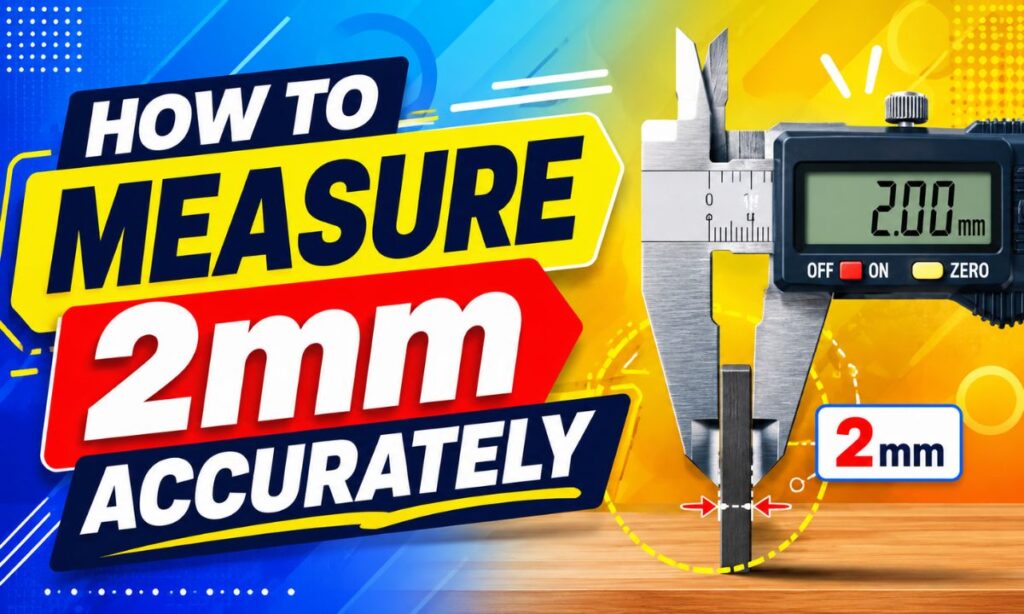
If you are doing precision work, a digital caliper measuring to 0.01mm accuracy is the gold standard. You can find a reliable one for under $20 online, and it changes everything.
8 Most Common Things That Are 2mm In Size
A Standard Artist Pencil Lead — The Familiar 2mm Reference
If you have ever sketched, shaded, or doodled, you have held 2mm lead in your hand. The 2mm clutch pencil lead, used by artists and architects, is exactly 2mm wide. It is thicker and more durable than the 0.5mm variety most students use, and it glides across paper with much more confidence.
This is not the thin mechanical pencil lead inside a standard ballpoint-style pencil. That common variety is 0.5mm or 0.7mm, which is a completely different size. The 2mm pencil lead is a specialty lead found in clutch pencils — the kind illustrators and drafters reach for when they want bold, expressive lines.
Next time you are at an art supply store, pick up a 2mm clutch pencil and hold the lead up. That is your 2mm size comparison right there, solid and easy to feel between your fingers. It is probably the most hands-on way to understand this measurement without any math involved.
A U.S. Nickel Coin — 2mm You Can Pull From Your Pocket
The U.S. nickel measures approximately 1.95mm thick, which rounds up cleanly to 2mm. It is made of 75% copper and 25% nickel, giving it that durable, slim profile. The U.S. Mint has kept this thickness consistent for decades, making it a reliable reference.
Here is the trick: lay a nickel flat on a table and look at its edge head-on. That slim band around the perimeter is your real-life 2mm thickness example. No ruler, no caliper, no conversion needed.
This is honestly the most accessible 2mm comparison for any American reader. You probably have one in your wallet right now. Pull it out, look at the edge, and you now know exactly what 2mm looks like in your everyday world.
A Mustard Seed — Nature’s Tiny 2mm Powerhouse
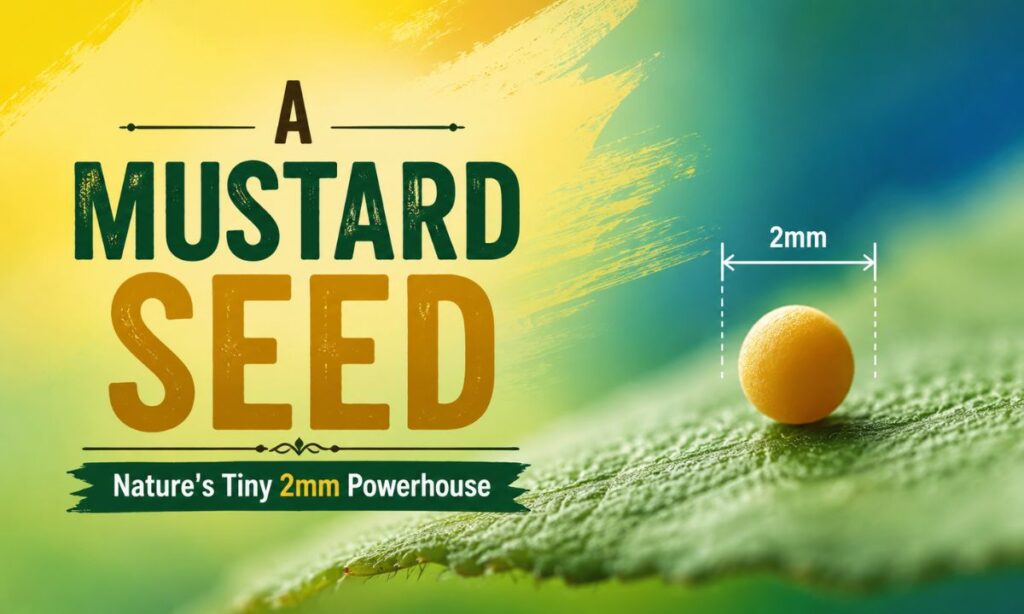
Mustard seeds measure between 1 to 2mm in diameter depending on the variety. Yellow mustard seeds tend to sit closer to 1.5mm, while black mustard seeds (Brassica nigra) can push right up to 2mm. Over 40 varieties of mustard thrive in temperate climates, and they all cluster in this tiny size range.
Despite being one of the smallest 2mm objects in nature, mustard seeds are packed with healthy fats, antioxidants, and bold flavor. They are in virtually every American kitchen, sitting in a spice rack or tucked into a jar of mustard. That tiny dot you see when you open the jar is your living, edible 2mm reference.
Here is a fun way to think about it: a standard garden pea measures about 8 to 10mm in diameter, making it four to five times larger than a single mustard seed. So if someone asks how small 2mm is, just say: it is one-fifth the size of a pea.
A Ceramic Tile Spacer — The 2mm Tool Behind Flawless Floors
If you have ever retiled a bathroom or watched a home renovation show, you have seen those little plastic crosses. Standard ceramic tile spacers come in a 2mm size, and they are the unsung heroes of any clean tile job. They sit between tiles during installation to keep the grout gap perfectly even throughout the whole floor or wall.
Two main types exist: the X-shaped spacer for standard grid layouts, and the T-shaped spacer for brick-pattern installations. Both are typically 2mm thick, because that gap size hits the sweet spot between too tight and too wide for most residential tile work. Skip those spacers, or grab the wrong size, and the unevenness shows up loud and clear once the grout dries.
The next time you walk across a tiled floor, crouch down and look at the grout lines. That consistent gap between each tile is very likely exactly 2mm wide. That tiny, precise measurement is what separates a professional-looking floor from a frustrating DIY disaster.
A Small Ant — A Living, Moving 2mm Measurement
Little black ants (Monomorium minimum) measure between 1.5 to 2mm in body length. They have uniformly black, shiny exoskeletons, and they are one of the most common insects you will ever spot in an American kitchen or backyard. These tiny creatures are also remarkable architects, building tunnels and colony structures with extraordinary precision at this minuscule scale.
Here is a mental trick that actually sticks: the next time a tiny ant crosses your kitchen counter, you are watching a live 2mm ruler in motion. Its entire body from head to abdomen fits right within that 2mm range. It is a weird and oddly satisfying way to lock in the measurement.
What makes this reference so useful is that it is free, always available, and genuinely surprising to most people. Nobody thinks of bugs as measurement tools, which is exactly why this one is so memorable. Spot an ant and immediately think: that is 2mm.
Also Read:20 Grams: Things with Pic That Weigh 20g (2026)
A Matchstick Shaft — 2mm of Potential in Every Strike
The wooden shaft of a standard matchstick measures approximately 2mm in diameter. This is not the red or white head at the tip but the thin wooden body of the stick itself. That shaft diameter is precisely engineered so the right amount of wood burns steadily and safely from a single strike.
A matchbox that holds them typically measures around 50.5mm by 37.5mm, and inside, dozens of those 2mm sticks are packed tightly in rows. So the next time you light a candle or start a campfire, look at the stick between your fingers before you strike it. That slim wooden shaft is your 2mm diameter reference, right there in your hand.
Matchsticks are universally known but almost never thought of as a measurement reference, and that is the gap worth filling. They are in kitchen drawers, camping kits, and fireplace mantels across the country. An effortless, always-nearby 2mm size comparison that most people overlook completely.
A Human Hair Bundle — The Biological 2mm Reference
A single human hair averages between 60 to 100 micrometers in diameter, which is far thinner than 2mm. But bundle together roughly 20 to 30 average human hairs, and the resulting cluster measures right around 2mm wide. This is a genuinely surprising way to feel the measurement rather than just see it.
Hair thickness varies by genetics, age, and health, but the math holds up consistently across most hair types. Gather a small pinch of hair from your head, press the strands tightly together, and hold them up against a ruler. That cluster is sitting right at the 2mm mark, which makes it one of the most personal and tactile references on this list.
This one works especially well if you are explaining the measurement to kids or anyone who does not have a ruler nearby. Everyone has hair, which means everyone has an instant 2mm comparison tool attached to their head. It sounds silly, but it absolutely works.
A SIM Card Tray Tool — The Tech 2mm Reference
That tiny metal pin that comes with every smartphone for ejecting the SIM tray? It measures approximately 2mm in diameter. It is one of the smallest precision tools most people own, and it lives quietly in the tiny slot cut into the phone box or taped to the manual.
The nano-SIM format, which most modern phones use, measures 12.3mm by 8.8mm by 0.67mm. The precision at which these tiny components are manufactured is genuinely remarkable given how small 2mm actually is. Every millimeter matters when engineers are designing something that slides in and out of your phone thousands of times.
If you want a tech-forward 2mm reference, this is the one. It connects the measurement to something people touch daily, especially anyone who travels internationally and swaps SIM cards regularly. Pull out the ejector pin, hold it between your fingers, and you are holding 2mm of precision engineering.
How to Measure 2mm Accurately
Most Americans work with inch-based rulers their whole lives, so measuring 2mm on a ruler can feel unnecessarily confusing. Here is exactly how to do it, no math degree required.
On a metric ruler: find any centimeter line, then count exactly 2 of the smallest tick marks to the right. Each tiny mark equals 1mm, so 2 marks equals your 2mm measurement right there. This is the fastest method if you have a metric ruler handy.
On a standard American tape measure: look for the smallest available markings between the larger inch lines. Each tiny line represents 1mm on a dual-scale tape measure. Count 2 of those lines from any centimeter number and you are done.
• Without any ruler: grab a U.S. nickel, lay it flat, and look at the edge. That thickness is approximately 1.95mm, which rounds cleanly to 2mm.
• For precision work: use a digital caliper. These tools measure to 0.01mm accuracy and are the gold standard for jewelry, engineering, and tile installation.
• Pro tip: most American rulers divide inches into 1/16ths, and since 2mm is approximately 5/64 of an inch, a metric ruler will always give you a more accurate read for anything sub-centimeter.
Why 2mm Matters More Than You Think
Most people assume that a measurement this Wondering how big is 2 mm? See real-life size comparisons and visuals to understand 2 mm length easily, no ruler needed! is only relevant to engineers or scientists. But the truth is that 2mm tolerances show up in everyday life constantly, and getting them wrong has real consequences. A 2mm error in tile spacing ruins an entire floor. A 2mm gap in a dental crown causes pain. A 2mm shift in a mechanical part causes premature wear.
In jewelry design, a 2mm gemstone is roughly the size of a pinhead. But in a pave setting, dozens of those tiny 2mm diamonds or sapphires are clustered together, creating a surface that sparkles like solid light. That is the power of precision at the millimeter scale: individually tiny, collectively breathtaking.
In nature, the 2mm range is where some of the most interesting life exists. Soil mites, certain larvae, plankton, and plant seeds all live in this measurement window. Understanding 2mm in nature gives you a new appreciation for just how much is happening in the world right below your ability to notice.
Conclusion
Two millimeters is easy to underestimate, but it is everywhere once you know where to look. From the nickel in your wallet to the ant crossing your countertop, from the tile spacer holding your bathroom floor together to the matchstick in your kitchen drawer, 2mm shows up in real life constantly.
The next time someone mentions millimeters and your brain draws a blank, remember this list. Pick the reference that clicks best for you — whether that is the nickel edge, the artist lead, or the bundle of hair — and use it. Measurement only feels abstract until you connect it to something real.
Now you have eight very real things to reach for. Drop a comment below and tell us which 2mm comparison surprised you the most. And if this helped, share it with someone who always zones out when metric measurements come up.